
.png)
Behind the Brand: Emily Cotton on building memorable marketing at On the Beach

Whether it's introducing a tongue-in-cheek 'Beckham Clause' to protect holidaymakers from family feuds, calling on schools to introduce an 'Inset Week' to help families save money on holidays, or bringing Paddy McGuinness' trademark humour into campaigns that extend far beyond traditional advertising, On the Beach has become one of the UK's most recognisable examples of a brand that knows how to create conversations.
What makes these campaigns stand out isn't simply that they're fun. Behind each one is a clear understanding of customer behaviour, cultural moments and brand personality, ensuring every activation feels relevant to the audience while reinforcing what On the Beach stands for. Rather than chasing headlines for the sake of it, the brand consistently finds creative ways to connect timely stories back to the challenges and experiences its customers genuinely face.
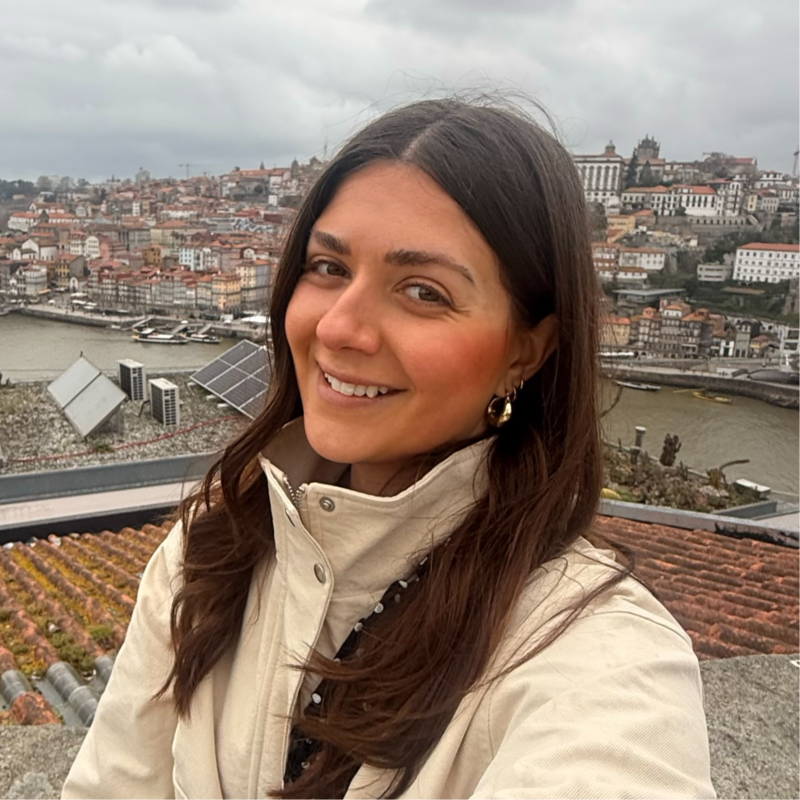
Helping bring that approach to life is Emily Cotton, Marketing Manager at On the Beach. Having built her career across SEO, content, PR, brand marketing, partnerships and events, Emily has spent more than a decade developing campaigns that combine commercial objectives with ideas people genuinely want to share. Before joining On the Beach, she led marketing activity for travel and hospitality brands including Escape Lounges and aether at CAVU, giving her a unique perspective on building memorable customer experiences both online and offline.
In this edition of Behind the Brand, Emily explains how campaign ideas evolve from spontaneous conversations into integrated marketing activity, why saying no is often one of the most important decisions a marketer can make, how different teams work together to strengthen every campaign, and why creating conversations will always matter more than simply chasing conversions.
About Emily Cotton
Emily Cotton is Marketing Manager at On the Beach, where she helps shape brand strategy and integrated marketing campaigns across the business. With more than ten years' experience spanning SEO, content, PR, brand marketing, partnerships and events, Emily has built her career creating campaigns that connect with audiences across multiple channels. Before joining On the Beach, she led marketing activity for travel and hospitality brands including Escape Lounges and aether at CAVU, alongside previous roles at Castore and GLOSSYBOX.
Inside Emily Cotton's Role as Marketing Manager at On the Beach
What does a typical week look like as Marketing Manager at On the Beach?
It's going to sound cliché, but every week is quite different. Yes, we have weekly catch-ups and meetings that follow the same format, but we make things happen so quickly that I'm jumping into something new so often. And this is what I love so much about being at On The Beach.
One day I’ll be heads down developing a long-term brand proposition, the next I'll be in a room with my wider team - PR, social, CRM, Partnerships… - throwing ideas around about how to turn something topical into something people will talk about us in relation to.
A good chunk of my role is connecting different parts of the business, and I get to work with some really great people and teams. The variety keeps it exciting, and every week I'm learning something new.
What is your typical brainstorm process when you're coming up with new ideas for On The Beach?
I’m type A to a tee, and a sucker for organisation and clear step-by-step plans, but I truly believe the best ideas will never come from structured processes or pre-planned meetings.
Our best ideas always seem to come from bouncing silly ideas around with each other, with absolutely no plan. Usually whilst getting coffee or hovering around each other's desks. One idea will lead to another, and then to another, and suddenly one will have someone saying “I think there’s something in that” and we’ll take it from there.
Who do you work most closely with when bringing a campaign to life? And how do you work together to make campaigns even stronger?
Our campaigns are genuinely a team effort. For example, PR might kick-start an idea that they think will stand out and data might do some digging to see if we can genuinely support (or challenge) that idea. If we give it the thumbs up, everyone else will then bring ideas for their channels to the table - how it could look creatively, how it’ll show up on social, how we’ll tailor it and send it out to different audiences via CRM…
Each team will see the customer from a different angle, and our strongest campaigns bring those perspectives together.
How On the Beach Develops Marketing Campaigns That Get People Talking
What’s the first thing you look for in a campaign idea before deciding it’s worth investing time in?
The first question I consider is “If I saw this, would I want to tell someone else about it?”. If it excites me and I'd be rushing to share it, I know there’ll be others out there who’ll feel the same.
Great campaigns create conversations before conversions. Of course we need to deliver commercially in the here and now, but if nobody remembers what we’ve done, our work is unlikely to have much long-term impact.
Then I ask whether it's right for the On the Beach brand. Just because something is going to cut through the noise of everything else going on, it doesn't mean we should be part of it. Sometimes the right decision is not being a part of the conversation at all.
Is there a campaign you’ve worked on that’s taught you the biggest lesson as a marketer?
I’ve been lucky enough to get involved in a lot of big brand propositions and product launches over the last 10 years or so. And what these have taught me is that you need to think bigger than just the campaign.
These big projects challenge me to think beyond launch marketing - the press release, the event, the social post of ‘now open’ or ‘now on sale’, and instead create something customers will genuinely value over time.
Another great lesson has been that the best ideas often get simpler as they evolve. It's easy to keep adding features, ideas or new avenues that seem beneficial or relevant, or that keep all stakeholders involved happy. But the real challenge is stripping things back until what we’re trying to do is instantly understandable to those we want to buy into it.
What’s one part of bringing a campaign to life that people on the outside probably underestimate?
Alignment. For sure. People probably think coming up with the initial idea or working out how to make it successful are the difficult parts, but getting every team moving in the same direction, at the same time can sometimes be the biggest challenge.
What works for CRM might not be what Legal wants, or what will make the biggest bang in PR might not work for Commercial. It’s about finding the balance and ensuring all departments are bought in (and have signed off), without slowing things down.
The best campaigns are usually great because lots of people have worked really well together behind the scenes.
At what stage do you know a campaign is going to be successful?
It’s normally a really good sign when everyone involved starts building on the same idea, instead of questioning why it should exist. Getting excited about how they can make it work for their channels, and suggesting how they could adapt it for their specific audiences.
Some of our biggest and best ideas have completely flopped before, whilst some of our smaller ones that we liked (but maybe weren’t in love with), or that only took a couple of minutes to pull together and get live, have performed above what we could have ever imagined.
I don’t think you ever really do know which way something is going to go. If you believe in it, you’ve just got to take the risk.
How To Build a Distinctive Brand in the Travel Industry
On the Beach has a really recognisable brand personality. How do you make sure every campaign still feels unmistakably “On the Beach”?
We always come back to the same question: would a competitor do this? If the answer is yes, we probably haven't pushed it far enough.
What I love about On The Beach, even before I worked here, is that we’re a fun brand - playful, cheeky, and culturally aware. So we always lean into that. All whilst making sure there’s a genuine story or helping hand to customers to get the most out of their holidays underneath!
Consumer trends move incredibly quickly. How do you decide which trends are worth embracing and which ones are better left alone?
As well as deciding if they’re relevant to us and our audience, I think timing is so important. If we notice something we like (and we think our customer will find fun too) as it’s becoming popular, and we can jump on it that day, then yes, we’re going for it! We aim to be one of the first - or the only! - and if we had to go through endless approvals and red tape to get things live (which thankfully has never been the case so far) we’d never get to be that.
What’s one marketing decision that can make a much bigger difference than people realise?
Saying no. Every campaign kick off begins with dozens of interesting, funny, very On The Beach ideas attached to it, but trying to do everything often weakens the core message we’re trying to get out.
The campaigns I remember best communicate one idea brilliantly, rather than trying to squeeze in 10 ideas and only do this reasonably well.
How SEO, AI and Brand Marketing Are Changing the Industry
Your career has covered content, SEO, brand, events and partnerships. Which discipline has influenced the way you think about marketing the most?
I’ve never really thought about this… I guess I’ve always assumed that everything I've learned has combined together over the years, to help me get to how I think and how I approach things today.
But if I try to pinpoint one area I’ve worked on specifically, I’d probably say SEO.
It was the first area I worked in, and it taught me to always consider the customer’s intent. Because people tell you exactly what they're trying to achieve through what they search for. And that mindset has stayed with me throughout my career.
These days, whatever I'm working on, I'm still thinking about what problem the customer is trying to solve and how we make that journey easier, or more enjoyable.
Has the way you measure marketing success changed over the course of your career? What does success look like to you today?
Definitely. Earlier in my career I was taught to be solely focused on campaign metrics, and that work was only ever good if it immediately performed; getting clicks, traffic, engagement...
Today I know this isn’t everything. And I'm much more interested in longer-term impact. Is the brand becoming more memorable? Are customers choosing us more often? Are we creating something people want to come back to again and again?
Those things are much harder things to measure, but they're often the most valuable.
AI is changing the way marketing teams work. How are you using it today, and where do you still think people need to be cautious?
As scary as it might sound to some people, AI has become part of my everyday. Not only has it helped automate (and prioritise) my to do lists and speed up jobs that used to be manual and take hours of my day to complete, but I'll use it to explore ideas and bring to life early concepts that I’m maybe struggling to visualise or communicate in words.
I don't think I’d ever want to use it to replace strategic thinking though. The real value of anything we do comes from the human element - plus I enjoy racking my brain to come up with solutions to problems myself.
One of the biggest risks of AI in my opinion, is ending up with lots of marketing that’s technically good, but is identical to everything else already out there. The brands that stand out will always be the ones with clear personalities, and AI will never beat a human when it comes to that.
Emily Cotton's Advice for the Next Generation of Marketers
What’s one piece of advice you’d give someone hoping to build a career working behind brands like On the Beach?
Inspiration can come from anywhere, so stay curious.
Some of the best, most inspiring ideas will come from things that have nothing to do with your industry, or even marketing - think films, TV, travel, social media, sport, conversations with friends or even those you overhear on the street.
And don't be afraid to speak up and share ideas. Even if you think it’s silly, or it wouldn’t work, or you’re simply scared to voice your opinion in the room you’re in. Marketing is rarely about having the answer straight away, it's about developing and improving a ‘solution’ together.
Looking ahead, what do you think consumers will expect most from brands over the next five years?
As time goes on and what we can all do and achieve becomes bigger and bigger, I think people will want brands to make life feel simpler and more personal.
We’re all overwhelmed with choice - and that’s definitely the case working in the travel industry. So brands that can remove friction, help with decision fatigue and add genuine value personalised to those they’re offering it to - not just when you’re about to buy, but throughout the whole customer journey - will become the best.
One of the biggest takeaways from Emily's interview is that memorable marketing rarely comes from one department or one brilliant idea in isolation. Instead, it comes from bringing together different perspectives, challenging ideas, stripping campaigns back to their strongest message and creating work that people genuinely want to share with others.
Her career also highlights how valuable a broad marketing background can be. Having worked across SEO, content, PR, partnerships, events and brand, Emily approaches every campaign through the lens of the customer rather than a single channel. It's a reminder that the strongest marketers aren't defined by one specialism, but by their ability to connect disciplines and build ideas that work together.
As marketing continues to evolve alongside AI, changing consumer behaviour and increasingly integrated teams, Emily believes the brands that stand out won't necessarily be the loudest. They'll be the ones with a distinctive personality, a clear purpose and the confidence to create work that people remember. For anyone working across PR, marketing or brand, her insights offer a fascinating look at how modern campaigns are really built behind the scenes.


Comments