
.png)
Guide Dogs turns 20-week ultrasound scans into tactile models for parents with sight loss
- Thea Chippendale
- 3 hours ago
- 4 min read


Key Takeaways
Guide Dogs has launched First Hello, a pilot transforming traditional 20-week ultrasound scans into tactile 3D-printed sonograms.
Parents, grandparents and other family members with sight loss can upload a scan through an accessible online portal and receive a bespoke model free of charge.
Around 50 tactile sonograms will be available during the initial pilot.
The launch is supported by research among 2,000 UK adults with sight loss and a hero film following families as they hold their models for the first time.
For many expectant parents, the 20-week ultrasound is the first opportunity to see the shape of their baby’s face, hands and body, but when that experience is presented almost entirely through a screen or printed image, parents with sight loss can be left relying on someone else to describe the moment to them.
Guide Dogs is hoping to make that milestone more accessible with the launch of First Hello, a new pilot transforming traditional 2D ultrasound scans into bespoke 3D-printed models that can be explored through touch. The tactile sonograms allow parents, grandparents and other family members who are blind or partially sighted to trace the contours of the baby before they arrive.
Families can apply through a dedicated accessible portal and upload the image from their 20-week scan, which is then converted into a 3D render before being printed and delivered free of charge. Around 50 models will initially be available as part of the pilot, giving Guide Dogs an opportunity to introduce the service on a smaller scale. Supported by Hope&Glory, the launch also includes new research exploring how people with sight loss experience important family moments, alongside a hero film featuring real parents and grandparents receiving their tactile sonograms.
How First Hello transforms a traditional 20-week ultrasound into something families can explore through touch
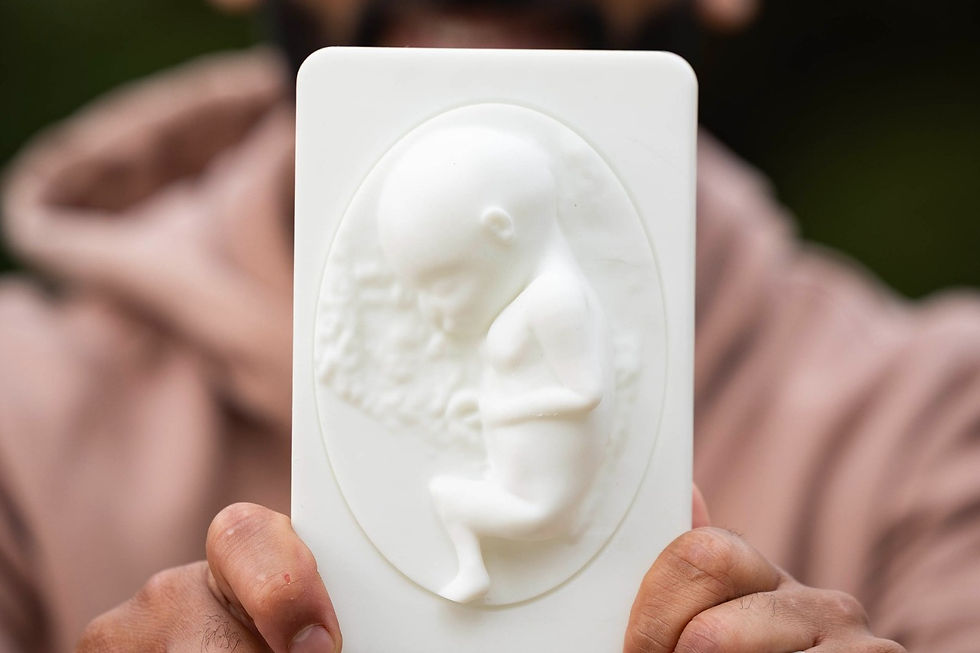
The process begins with the same ultrasound image expectant parents would usually take home from their appointment. Once uploaded, specialist technology transforms the 2D scan into a bespoke digital render, which is then 3D-printed as a physical model.
The finished sonogram allows somebody with sight loss to feel details that would otherwise be communicated visually, including the shape of the baby’s face, hands and body. Although it doesn’t replace the medical scan or information provided by healthcare professionals, it gives families another way to connect with the image afterwards.
The service is also available to grandparents, relatives and friends with sight loss, recognising that pregnancy milestones often extend beyond the expectant parents. By making the models free and providing an accessible ordering process, Guide Dogs has created a practical resource that eligible families can request rather than limiting the campaign to raising awareness of the issue.
How research and real family experiences explain the need for tactile sonograms

The launch is supported by research among 2,000 UK adults with sight loss, which found that 54% of parents with a visual impairment believe standard pregnancy scans should be made more inclusive. Eight in 10 said every parent should be able to experience pregnancy milestones in an accessible way, while 64% felt that touching a sonogram could help parents and relatives with sight loss feel more included.
To show what that experience could mean for families, Guide Dogs released a hero film following parents and grandparents as they held their tactile models for the first time. One of those featured was expectant father Reece Finnegan-Knight, who said he had struggled during previous appointments because friends and family appeared to know more about his baby than he did.
“Holding the tactile scan for the very first time was an incredible experience,” he explained. “I didn’t feel like I got much from our first scan appointments, and I found it really hard thinking that friends and family knew more about my baby than I did. First Hello gave that moment back to me.”
Reece’s experience helps explain the accessibility barrier beyond an inability to see the ultrasound screen. The tactile model gave him an opportunity to explore the scan independently and share the same information that had previously only been available visually.
Kerry Bevan, head of support services at Guide Dogs, added: “Every parent, grandparent and loved one deserves to experience the joy of early parenting milestones. Too often, people with sight loss are excluded from significant life moments that others take for granted.”
Why The PR Insider loves it
What we really like about First Hello is how each part of the campaign helps explain the same accessibility issue in a different way. The tactile sonogram provides the physical element, giving families something they can explore independently, while the hero film captures the emotional response of parents and grandparents holding the models for the first time. Alongside this, the research among 2,000 adults with sight loss gives the campaign a data-led foundation, showing that 54% believe traditional pregnancy scans should be more inclusive and 64% feel a touchable sonogram could help families with sight loss feel more involved.
These elements then lead directly to a service people can access through the free online ordering portal, ensuring the campaign offers a practical response as well as raising awareness. Together, the creative storytelling, lived experiences, physical product and supporting data provide a much fuller picture of the issue, showing both why change is needed and what a more accessible version of this milestone could look and feel like.
SOURCES


Comments