
.png)
easyJet and Life360 launch Teddy Trackers to prevent holiday heartbreak


Key Takeaways
easyJet and easyJet holidays have partnered with Life360 to launch free Teddy Trackers, helping families locate children’s favourite toys while travelling.
The initiative follows research revealing that 87% of parents worry about losing their child’s favourite toy on holiday, while 65% say it has already happened to them.
Families travelling from selected UK airports will be able to collect a complimentary Life360 Tile tracker from easyJet bag drop desks from 31 July, while stocks last.
There are few holiday disasters capable of causing quite as much family-wide panic as a missing teddy bear, particularly when that slightly battered, completely irreplaceable companion is the only thing standing between a tired child and a peaceful night’s sleep.
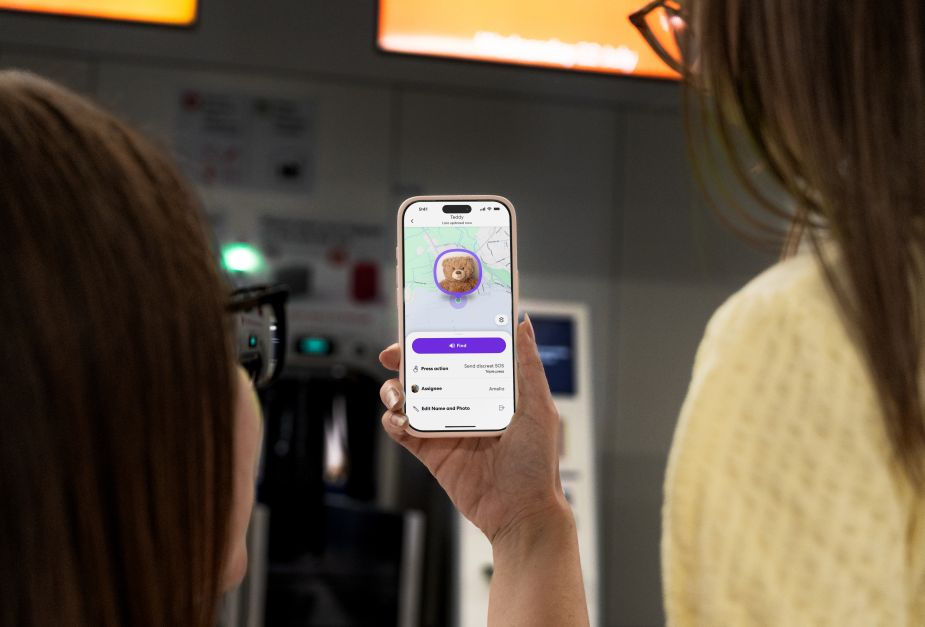
That is exactly the problem easyJet and easyJet holidays are hoping to prevent through a new partnership with family connection and safety app Life360, which will see complimentary Teddy Trackers distributed to families travelling from selected UK airports during the summer holiday season. The Life360 Tile trackers can be attached to a child’s favourite teddy, comforter or toy, allowing parents to locate it through the Life360 app if it is abandoned at airport security, forgotten on an aircraft or left to enjoy an extended break underneath a poolside sunbed.
The initiative arrives during what is expected to be easyJet and easyJet holidays’ biggest summer to date, with more than 370,000 families preparing to travel and, if the accompanying research is anything to go by, hundreds of thousands of much-loved soft toys coming along for the journey.
How easyJet turned a familiar family fear into a useful travel campaign

While the thought of launching a tracking device specifically for teddy bears might initially sound like a wonderfully elaborate solution to a relatively small problem, easyJet’s research suggests that the disappearance of a favourite toy is anything but trivial for the families attempting to manage the aftermath.
Research commissioned by easyJet and easyJet holidays found that nearly four in five parents said their child’s favourite toy accompanies them on most, if not every, family holiday, while 87% admitted that they worry about losing it while travelling. Almost two-thirds of the parents surveyed said their child had previously lost a favourite soft toy or comforter on holiday, demonstrating that this is not simply another hypothetical concern for parents to add to an already lengthy pre-flight checklist.
Although more than half of parents attempt to prepare for the worst by packing a backup teddy, children are apparently far more observant than many adults would like to believe, with 81% of parents whose child had lost a favourite toy reporting that their child immediately spotted the replacement. In other words, purchasing a suspiciously pristine version of a teddy that has spent several years being cuddled, dropped, washed and dragged through every conceivable environment is not quite the seamless emergency strategy parents might hope it will be.
By attaching a Tile tracker to the original toy, families can use the Life360 app to check its last known location and, hopefully, retrieve it before its disappearance becomes the defining event of the holiday. Life360 has already seen more than 40,000 toys actively tracked around the world during the past 12 months, meaning the partnership builds upon an existing customer behaviour rather than inventing a use for the technology purely to support the campaign.
Why losing a favourite teddy can become much more than a minor inconvenience
For a child, a favourite teddy or comforter is rarely treated as another disposable item from the toy box, because it can provide familiarity in an unfamiliar hotel room, reassurance during a first flight and a comforting piece of home throughout an otherwise exciting but potentially overwhelming journey.
One-third of parents surveyed said their child’s favourite toy is considered an actual member of the family, while 37% said it regularly appears in family photographs and a further 33% admitted that they talk about it as though it were a real person. Stuffed bunnies were identified as the companions most commonly lost on holiday, accounting for 26% of disappearances, closely followed by traditional teddy bears at 25%, while action figures and dolls accounted for another 15%; meanwhile, Bunny, Teddy, Fluffy and Billy emerged as some of the nation’s most popular, if not particularly imaginative, toy names.
When one of these companions disappears, the consequences can continue long after the suitcases have been unpacked, with 31% of affected families reporting that bedtime became more difficult and children taking an average of six weeks to mourn their missing toy. More than half of parents said they would even change their holiday plans to recover it, while 29% had immediately ordered a replacement online and 26% had invented a story to explain why the original companion had suddenly vanished.
Airline and hotel employees frequently become unexpected members of the search party, with almost half of parents who had experienced a lost toy saying staff had played an important role in helping to reunite the family with it. easyJet Captain Matthew Clutterbuck has experienced this first-hand after launching an appeal to find the owner of Shackleton, a teddy bear that was left onboard a flight to London Luton, and his involvement gives the wider campaign a useful human example of how seriously these apparently small losses can be taken.
Why Life360 is a natural partner for the campaign
The best brand partnerships tend to feel immediately obvious once they have been announced, because each company brings something useful to the idea and neither appears to have been added simply to increase the number of logos on the press release.
easyJet and easyJet holidays have direct access to families at the precise point when a treasured toy is most likely to go missing, while Life360 already provides the technology needed to locate lost belongings through its Tile trackers. Together, the brands have transformed a product that might ordinarily be associated with keys, bags and luggage into a child-friendly travel essential, giving the technology a more emotional purpose without requiring a complicated explanation of how it works.
The free distribution model also helps the activation feel generous and useful, particularly during a summer when families will already be juggling passports, boarding passes, luggage restrictions, snacks, entertainment and the occasional airport meltdown. Rather than simply warning parents about the risk of losing a toy, the partnership provides an immediate solution that they can collect before travelling and continue using on future holidays, as the complimentary Tile tracker is theirs to keep.
Tom Rizzo, GM International at Life360, explained that the partnership is intended to help families avoid “teddy-related disasters”, adding that whether a beloved bear is abandoned at security or disappears beneath a sunbed, parents will be able to use the app to identify its location within seconds.
Why the research gives the Teddy Trackers campaign its emotional pull
The product itself provides the campaign’s practical hook, although it is the research that turns the idea into a much broader story about family travel, childhood attachment and the surprisingly extreme measures parents will take to recover a well-loved toy.
Statistics including the 55% of parents prepared to change their holiday plans, the six-week average mourning period and the 81% of children who recognised an emergency replacement all give journalists memorable details that can be incorporated into coverage, while also creating several different angles for parenting, travel, technology and lifestyle publications. The findings are humorous enough to attract attention, yet emotionally recognisable enough to ensure the story never feels as though it is making fun of the children or parents involved.
The campaign also benefits from having a clear seasonal deadline, because the trackers will become available just as hundreds of thousands of families begin travelling during the school holidays, when crowded airports, busy hotels and disrupted routines make lost possessions much more likely. By positioning the activation around a moment of heightened anxiety, easyJet and Life360 have ensured that the product feels relevant now, rather than appearing as a loosely timed partnership that could have launched during any month of the year.
Stuart Wright, customer director at easyJet holidays, said that the little things often make the biggest difference to a family holiday, particularly when a favourite toy provides a child with comfort and reassurance throughout the journey. Captain Clutterbuck similarly described these toys as constant companions that are much more meaningful than an ordinary item packed inside a suitcase, which is precisely why helping them find their way home matters.
How families can collect an easyJet Teddy Tracker

The complimentary Teddy Trackers will be available to easyJet and easyJet holidays customers travelling from London Gatwick, Manchester, Edinburgh and Belfast, with families able to collect one from easyJet bag drop desks from 31 July while stocks last.
Once attached to a teddy bear or another treasured companion, the Life360 Tile can be connected to the app and used to locate the toy throughout the holiday, providing parents with an extra layer of reassurance before the family has even reached the departure gate.
Although the activation is relatively simple, its usefulness is likely to continue well beyond the initial airport giveaway, because families can retain the tracker and attach it to the same toy on future trips. That longevity makes the partnership feel more meaningful than a piece of branded airport merchandise, while ensuring both easyJet and Life360 remain associated with the relief of avoiding a holiday crisis.
Why The PR Insider loves it
There are plenty of travel campaigns built around the promise of removing stress from a family holiday, although few focus on a problem as specific, emotionally charged and instantly recognisable as the disappearance of a child’s favourite teddy bear.
easyJet and Life360 have taken a familiar family fear and created a solution that is easy to understand, helpful and full of strong media angles, while the combination of consumer research, seasonal relevance and an appropriately named product gives the campaign everything it needs to travel beyond the airport.
Most importantly, the partnership recognises that the smallest item in a family’s suitcase can sometimes carry the greatest emotional weight, and by helping parents keep track of Bunny, Teddy, Fluffy, Billy or whichever slightly dishevelled companion has been granted full family-member status, the brands have created a campaign that offers more than publicity alone.
It might not prevent every holiday tantrum this summer, but it could at least ensure that fewer of them begin with the words: “Where’s my teddy?”
SOURCES


Comments